
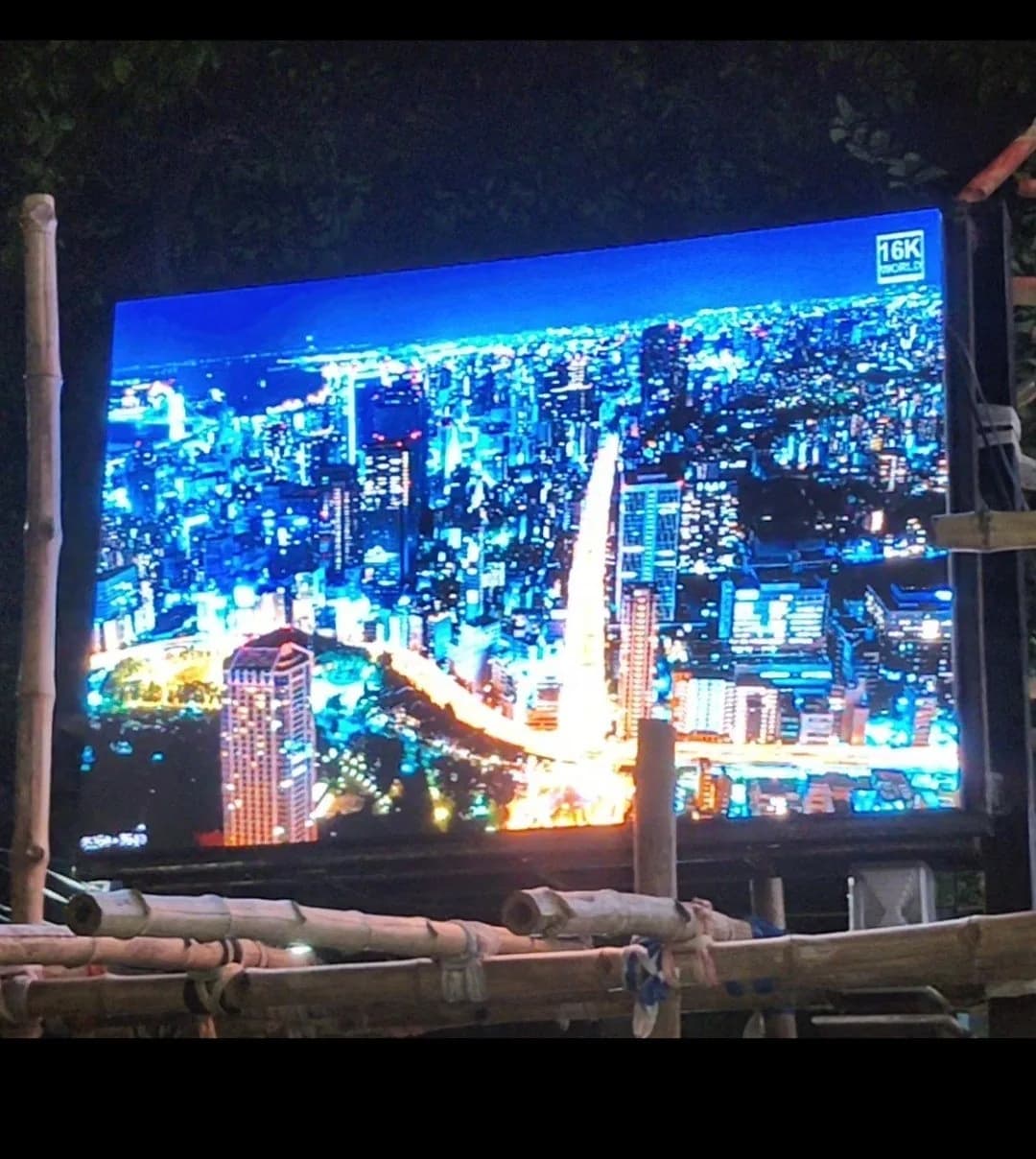
An LED screen made for a boardroom will not survive on a roadside, and an outdoor screen is overkill in a lobby. Three things set them apart.
Brightness
Outdoor screens compete with sunlight, so they are built far brighter than indoor ones. Indoor walls are typically a fraction of that brightness, which is also kinder to viewers' eyes at close range. Ask for the brightness figure in nits for any screen you compare.
Weather protection
Outdoor cabinets are sealed against rain, dust and heat, and are built to take heavy monsoon rain, heat and humidity. Indoor cabinets are not, and need a dry, ventilated space.
Pixel pitch
Outdoor screens are usually viewed from further away, so they use coarser pitches such as P4 to P6 to keep the cost sensible. Indoor walls use finer pitches, from P1.5 to P4, because people stand closer.
Installation
Outdoor screens need a structure that handles wind load and a safe power and earthing setup. This is where an experienced installer matters most.
Ready to plan your screen?